



by team member Simon
After a very early start and a two hour delay at Stansted Airport, I joined the group of four independent wine merchants and our UK based hosts at Alicante Airport, where we collected our hire cars and headed off for Bodegas Juan Gil in Jumilla, the first of five wine businesses we were to visit over two and a half days.
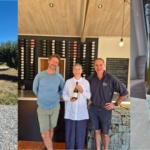
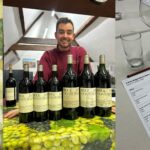
Maria Dugnol greeted us at Bodegas Juan Gil and laid on a tasting of their Jumilla wine range over a lunch of local dishes, which included ham, almonds, tomatoes and green peppers. Miguel Gil, the great grandson of the company’s founder, joined us.
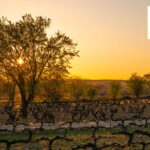
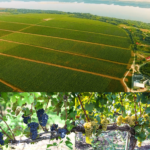
Situated on the slopes of the Peñarrubia mountain, the highest part of Jumilla and noted for its richly flavoured Monastrell, the bodegas owns over 750 hectares of vineyards (mainly low yielding, unirrigated bush vines). Some of the vines are over 90 years old. The business tries to maintain tradition and make the best wines that they can. Miguel Gil, an engineer by training, focuses on sustainability and looking after the environment, whilst also embracing new technology, such as the recently installed optical sorting machine which scans the grapes. Farming is organic.
The Monastrell red grape is the main focus here for red wine, with some Cabernet Sauvignon, Merlot, Petit Verdot and Syrah also grown. White wines are from the Muscat grape.
After lunch we visited their Bodegas Atalaya winery, where we saw freshly picked Garnacha grapes arriving, before seeing Juan Gil’s 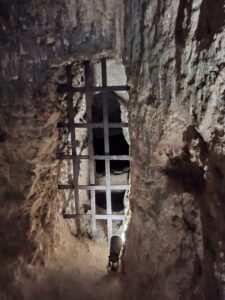 vermicompost plant, where their waste is converted into organic fertilizer using earthworms. (This put an end to confusion in the party about ‘Wine and hummus tasting’ in the itinerary as there had clearly been a breakdown in communication!)
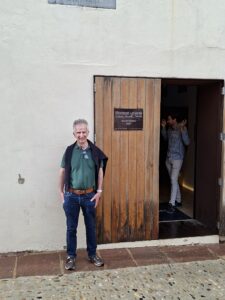
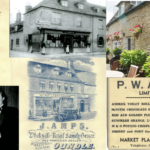
On Tuesday morning we left for Requena in Valencia, about 2 hours drive, to visit Bodegas Murviedro. Instead of visiting their main winemaking site, we met our hosts Jordi and Ivan at their historic bodega (historica) in the medieval part of Requena. The old bodega is really a museum, with a network of caves underneath, where historically wine was made. The building above the ground was at one time an old silk factory, a fact reflected in many of the winery’s labels.
We learnt that the first winery in Spain was in Requena in the Roman period. When the Arabs occupied this part of the country, wine and wine making was forbidden on religious grounds. From the 16th century wine making returned. All the medieval houses had caves underneath, which were used at various times to store cereals, grain or wine or for the production of olive oil, wine or mushrooms.
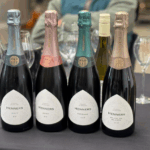
Bodegas Murviedro grows and has access to a wide range of indigenous and international grape varieties and produces a large range of wine styles. 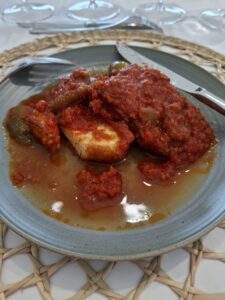 We tasted Cava (10% of Cava is produced outside Catalonia), Grenache, Sauvignon Blanc, Viura, Viognier, Muscat, Monastrell, with Bobal perhaps being the most interesting being local.
Having spent some time taking in the caves and the relics of their wine making history, we had lunch in a local restaurant with our Spanish host, before departing for Bodegas Sierra Norte at nearby Calderon.
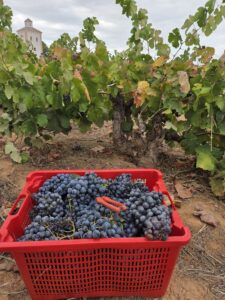
Bodegas Sierra Norte, Raices Ibericas, Calderon, Utiel-Requena – We spent the afternoon and evening here and we immediately learnt that in June this year Sierra Norte had merged with Raices Ibericas in Calatayud. The two wine businesses had worked together for several years. The new firm Raíces Ibéricas owns 440 hectares of vineyards in Jumilla, La Roda, Utiel, Requena and Calatayud.
We met Manuel Olmo, who took over his parents’ vineyards in 1999 and promised himself then ‘no limit on sustainability. Since then, he has turned the farming over to organic methods, focusing on local grape varieties, and then built a winery that produces 100% of its own energy and recycles 100% of water and waste. And now Manuel is focusing on the soil by gradually introducing Regenerative Agriculture to his 400ha of vineyards. This results in lower yields to start with, but they will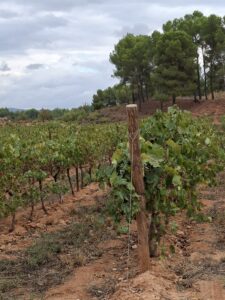 increase. More organic matter in the soil retains more water.
The Bobal grape variety accounts for 70% of the production. As Bobal bunches are traditionally too big (800g) for the best wines due to inconsistent ripening within a single bunch, here the bunches have been reduced to 300g through pruning. At 900 metres above sea level and with the effect of the Levante wind, this area is a little cooler than the surrounding regions. Bobal takes a long time to ripen. Wednesday morning, We went to see Gabriel and Alberto Sanchis Mestre at Can’ Leandro near Ontinyent, a town mid-way between Valencia and Murcia, and 50km from the coast. Founded at the start of 2013 by, transforming their family wine business to one focused on bottling their own wines from the local, traditional varieties, old Monastrell, Merseguera and Bonicaire grown in vineyards that they have rejuvenated. Starting at their ‘cellar’ in town, as to date building regulations have prevented construction nearer their vineyards, we then drove into the hills to find their vines, amongst the conifers, olive and oak trees.
These green wooded hills receive three times more rainfall than Jumilla. The water is retained in the limestone for the summer months. The limestone, sandy and clay soils contribute different qualities to Can’Leandro’s wines.
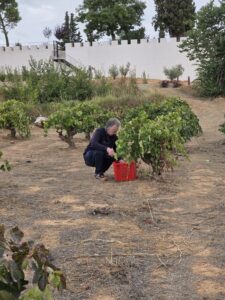
This small family winery makes authentic wines, from indigenous grapes that have almost vanished. These young wine growers/makers put their personality into these wines, whilst respecting the environment and minimizing intervention in the winery.
I was encouraged and excited by their passion for wine making, reflected in the wines we tasted over a relaxed ‘family style’ paella lunch in their kitchen, before heading for our return flights.