



Bulgaria has a long wine making history dating back to the Thracians with some evidence suggesting they produced wine since 4000B.C. With such a long winemaking history then why haven’t these wines hit the mainstream in the same way French or Italian wines did?
Well, they did to some extent, in the 70s and 80s Bulgaria was the 4th largest wine producer in the world. However, hardly any of this wine was seen in England with much of the wine being exported to the Soviet Union (roughly 90% of exports), the Bulgarian wine trade was a state-run monopoly. This crumbled in 1989 when the regime fell apart and slowly the transition of land and wineries began to return to private sector, quality suffered in this time until around 2000. It has been a slow road to better quality for producers since then but it’s safe to say Bulgaria is now regarded an excellent source of great quality and very well-priced wines.
In the 1960s Bulgaria was declared to have five distinct viticultural Regions: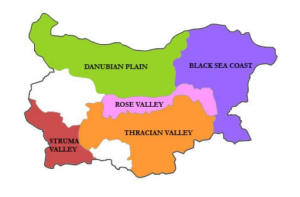
- The Danubian Plain
- Black Sea
- Rose Valley
- Thracian Lowland
- Struma River Valley
In addition to this there are several regions with ‘Guaranteed and Controlled Appellation of Origins’ (GCAO), a labelling terminology that keeps quality standards and origin of grapes in check. There are also several regions which have slightly different approved names in the US so may appear differently on maps.
The Wines:
Production is dominated by red wines, many are made from international varieties such as Cabernet Sauvignon, Merlot, etc (these were widely planted in the socialist regime). There is a movement by many growers who are slowly bringing back native and historical varieties.
The Reds:
Mavrud is an indigenous variety with a long history in Bulgaria; it is grown in most regions of Bulgaria and can produce many different styles. From lighter fresher styles with notes of cherries to heavier, more oaked styles capable of aging.
Rubin is a successful cross of Nebbiolo and Syrah, it had characteristics from both its parents with flavours of plums, spice, and herbal notes. Ages well in oak and allows the tannins to soften.
Shiroka Melnik is also known as Broad Leaved Melnik. Predominantly planted in the Struma Valley as it often struggles to survive outside the Valley and named for its large leaves. There have been many hybrids made from the Broad Leaved Melnik with one of the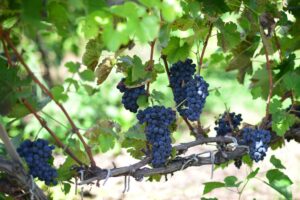 most popular being Melnik 55.
Pamid is one of the oldest varieties grown, it has always been very popular as a table wine, producing wines with pale color and light body. It can be used to make light red and rosé wines, although not as popular as it once was.
Gamza grown across Balkan countries with a different name (often called Kadarka) it is a key Bulgarian variety. Often light-bodied with light tannins but pronounced fruit these wines are easy-going and nicely structured, reminiscent of Barbera and Pinot Noir.
The Whites:
Dimyat is a very old variety with unknown origins, it is most commonly thought to be linked to Gouais Blanc (the ancestor of Chardonnay and Aligote). It produces wine which are light and ready to be enjoyed quickly as well the ability to produce richer, aged styles.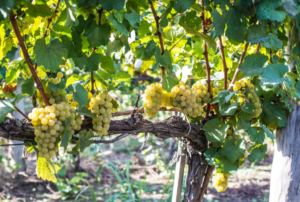
Taminaka (Tamyanka) Slightly confusing origins but shares many similarities with Muscat varieties especially Muscat Blanc à Petits Grains. This grape is used to produce dry highly aromatic wines with an incense aroma, as well as off-dry and sweet wines.
Sandanski Misket is a hybrid between Broad Leaved Melnik and Tamyanka. It has the perfumed character of Tamyanka and the herbal earth finesse of Melnik, often unoaked and enjoyed early.
There are also large plantings of international varieties like, Merlot, Cabernet Sauvignon, and Syrah along with white grape varieties such as Chardonnay and Sauvignon Blanc. There are many more native and international varieties to explore in this treasure trove.
Our current favorites are: